
Scientific Abstract:
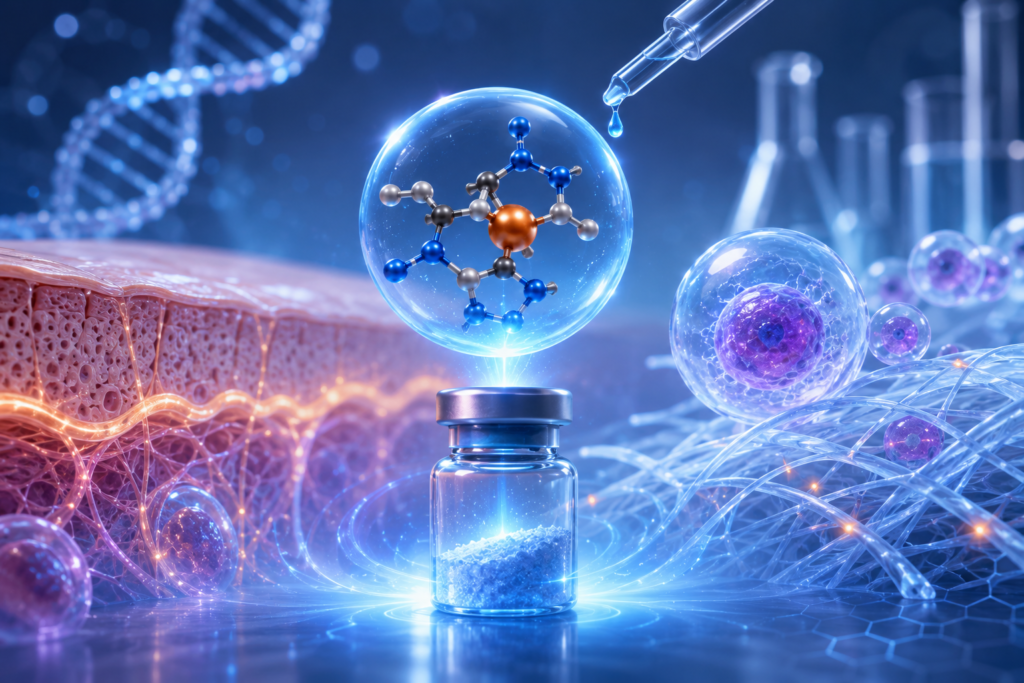
The tripeptide GHK-Cu (Glycyl-L-histidyl-L-lysine copper) is a pivotal signaling molecule in the modulation of the extracellular matrix (ECM). As we evaluate dermal aging protocols, the focus shifts from topical hydration to deep-tissue signaling. This paper explores the “Glow Protocol” as a mechanism for signaling fibroblast activation and collagen synthesis.
The Mechanism of Action:
In laboratory evaluations, GHK-Cu acts as a “carrier peptide,” delivering copper ions to specific enzymes involved in cross-linking collagen and elastin. Unlike traditional peptides, GHK-Cu has been shown to downregulate genes responsible for tissue degradation (matrix metalloproteinases) while upregulating anti-inflammatory pathways.
Research Implications for Dermal Longevity:
Fibroblast Proliferation: Signaling the body’s primary skin-building cells to increase density.
Barrier Integrity: Investigating the strengthening of the epithelial basement membrane.
Oxidative Defense: Researching the tripeptide’s role in quenching free radicals and reducing DNA damage in skin cells.
Conclusion: For researchers evaluating “The Glow Pen,” the focus remains on the high-purity GHK-Cu (50mg) complex. Our formulation is lyophilized to preserve the peptide’s delicate bond to the copper ion, ensuring that every research cycle yields definitive, high-resolution data